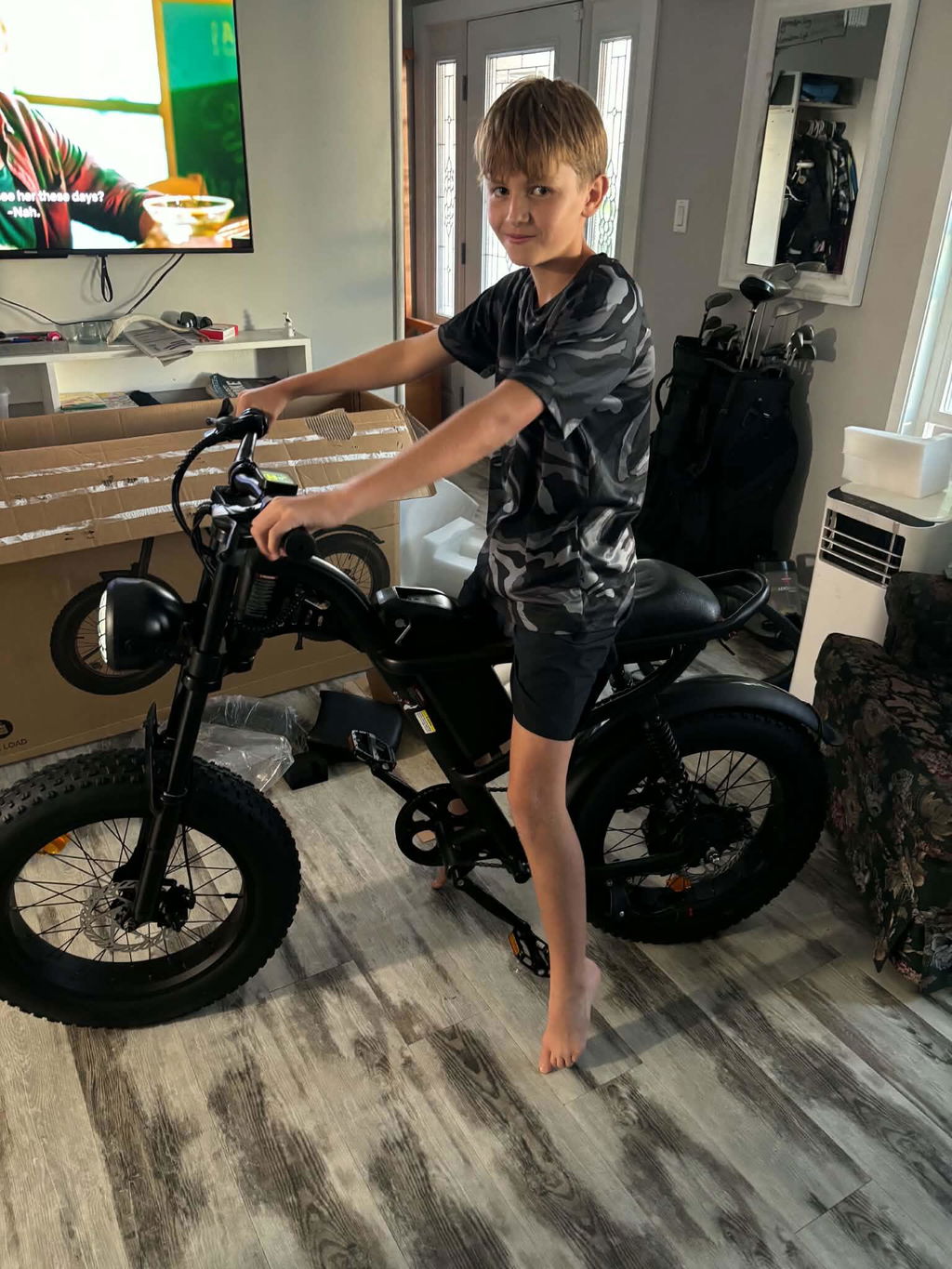
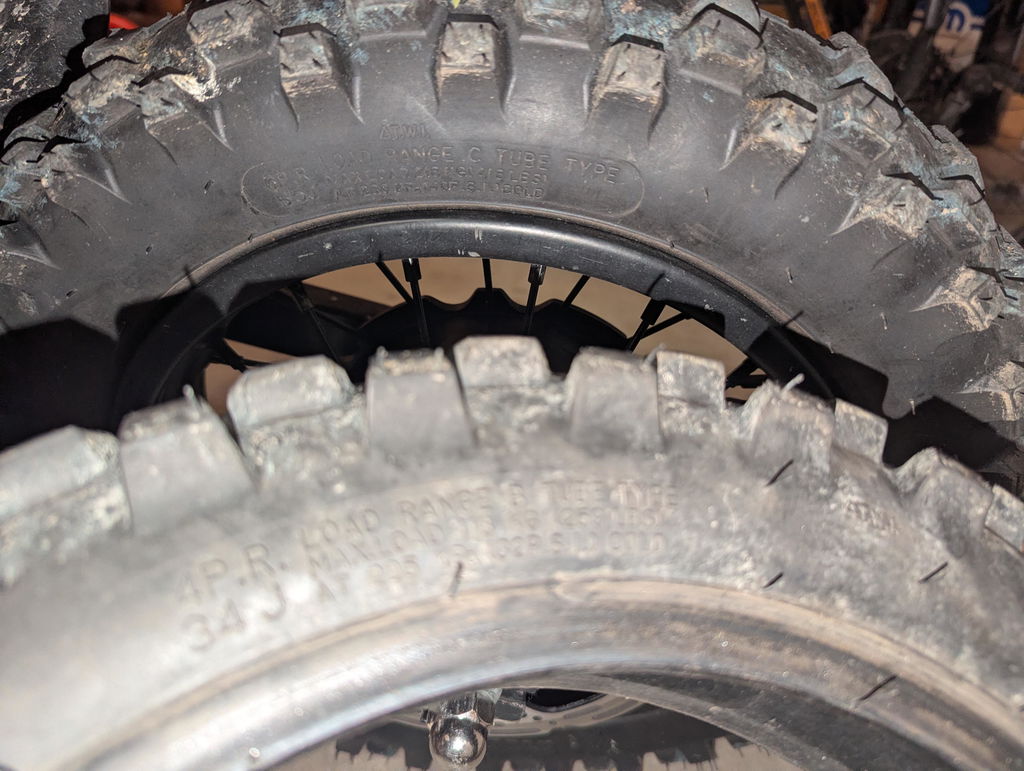
When choosing an electric bike, there are several factors to consider, including the type and placement of its motor. Motor placement may not be the first specification riders look at, but it plays an important role in how an e-bike delivers power and handles different types of terrain. The two most common designs are hub motors and mid-drive motors, and each takes a different approach to powering the bike. The table below shows why the decision is more complicated than comparing advertised wattage. The complete motor, controller, battery, gearing, tires, suspension and rider all influence how an electric dirt bike performs.
| Feature | Hub Motor | Mid-Drive Motor |
|---|---|---|
| Motor location | Inside the wheel hub, usually at the rear | Near the bottom bracket and crank |
| Power delivery | Directly to the driven wheel | Through the chain and gears |
| Motor power passes through the drivetrain | No | Yes |
| Steep, sustained climbs | Can require more electrical power and generate more heat | Gearing helps keep the motor in a useful operating range |
| Weight distribution | Adds motor weight to the wheel | Keeps more weight low and near the centre |
| Rear-wheel handling | Can feel more rear-heavy | More central weight distribution |
| Drivetrain wear | Motor power bypasses the chain and cassette | Motor power adds load to the drivetrain |
| Wheel servicing | Motorised wheel can be heavier and more involved to remove | Wheels remain more conventional |
| Mechanical complexity | Relatively self-contained | More closely connected to the drivetrain |
| Best suited to | Direct wheel drive, simpler power delivery, recreational and mixed riding | Steep climbs, technical terrain and riders who want to use gearing |
How a Hub Motor Works?
 A hub motor is built into the centre of a wheel, usually the rear wheel on an electric dirt bike. Instead of sending motor power through the bike's chain and gears, the motor turns the wheel directly. In a geared hub-motor system, the motor uses internal reduction gears to convert its high rotational speed into greater force at the wheel. The reduction system is contained inside the hub, so the motor's driving force does not need to pass through the bicycle chain or cassette.
Riding’times uses this type of rear geared hub motor across models such as the Z8, Z8 Pro, GT54, GT54 Pro, GT73 and GT73 Pro. The main characteristic of this design is that the motor and its reduction gearing are contained within the wheel. The rider can control the motor through the throttle or pedal-assist system, while the bicycle's chain remains separate from the motor's driving force.
Advantages of a Hub Motor
- Direct wheel power: The motor sends its power directly to the driven wheel without routing motor torque through the bicycle's chain and cassette.
- Less motor-related drivetrain wear: Because the motor bypasses the bicycle drivetrain, its power does not add the same load to the chain, cassette and chainring.
- Simple power architecture: The motor and its reduction system are contained within the wheel, creating a self-contained drive unit.
- Strong acceleration potential: A properly matched geared hub motor can provide substantial wheel-driving force, particularly when combined with an appropriate controller and battery.
Limitations of a Hub Motor
- Fixed relationship with wheel speed: Unlike a mid-drive, the motor cannot use the bicycle's gears to adjust its mechanical advantage during a climb.
- More weight at the wheel: The motor adds mass to the driven wheel, which can affect suspension response and handling over rough terrain.
- Heat on prolonged climbs: Long, slow climbs under heavy loads can place greater thermal demands on a hub motor because motor speed decreases as wheel speed decreases.
- Wheel servicing considerations: A motorised wheel can be heavier and may require additional care when removing or servicing it because of its electrical connections and axle hardware.
How a Mid-Drive Motor Works?
A mid-drive motor is positioned near the bottom bracket, between the pedals and close to the centre of the frame. Instead of turning the wheel directly, the motor sends its power through the bike's chain and gears before reaching the rear wheel. Because the motor works through the bicycle's gears, the rider can change the gear ratio depending on the terrain. A lower gear can be used for a steep climb, while a higher gear can be selected as speed increases on flatter sections. This allows the motor to operate at different speeds while the rear wheel rotates at a different rate.
Motor placement and gearing can affect energy efficiency, particularly on steep roads. A 2018 study comparing hub-drive and mid-drive e-bikes found that the mid-drive configurations tested were more efficient, with the hub-drive setup using 18% more energy under the study's conditions (Arango et al., 2018). The research focused on specific e-bike configurations and steep-road riding, so its results should not be treated as a direct comparison of every hub motor and mid-drive system. The key difference is therefore where the motor's power enters the drivetrain: a hub motor drives the wheel from the hub, while a mid-drive sends motor power through the bike's gears before it reaches the wheel.
Advantages of a Mid-Drive
- Uses the bike's gears: Riders can select a lower gear for steep climbs, allowing the motor to work with the bicycle's transmission.
- Centralised weight: The motor is positioned near the centre of the frame, which can help create more balanced weight distribution.
- Better suited to sustained climbs: Changing gears allows the motor to operate within a more suitable speed range as the terrain becomes steeper.
- Adaptable to varied terrain: The combination of motor power and selectable gears can be useful when riding through climbs, descents and technical sections.
Limitations of a Mid-Drive
- Greater drivetrain load: Motor power passes through the chain, cassette and chainring, placing additional demands on these components.
- More drivetrain maintenance: The chain and other drivetrain components may require more frequent inspection and replacement depending on power output, riding style and conditions.
- Higher system complexity: The motor, drivetrain and shifting system work together, making setup and maintenance more involved.
- Higher purchase cost in some applications: Mid-drive systems can be more expensive because of the motor, drivetrain and control components required.
Understanding the GT73 Pro's Motor Specifications
The Riding’times GT73 Pro is rated at 1,500W, with a peak output of 3,000W. The 3,000W figure represents peak rather than continuous power, which is an important distinction when comparing electric dirt bikes. The model is listed with 338Nm of torque. Torque figures can vary depending on where and how they are measured, so they should not always be compared directly between different motor designs. In particular, a torque figure associated with a hub-motor system is not necessarily equivalent to the crank torque typically quoted for a mid-drive motor.
The rear geared hub motor uses internal reduction gearing to convert the motor's high rotational speed into greater torque at the wheel. As a result, the torque figure is best considered alongside the gearing, controller and battery rather than as a standalone measure of performance. The bike combines this motor system with a 60V 40A controller, dual 60V 18Ah batteries, off-road tires and full suspension. Together, these components influence how power is delivered and how the bike performs across different riding conditions.
Which Motor Should You Choose?
The decision can be simplified by looking at the type of riding you actually do.
Choose a mid-drive if you:
- Regularly ride long or steep climbs.
- Spend significant time on technical or highly varied terrain.
- Want to use the bike's gears to manage motor performance.
- Prefer a more central motor position and balanced chassis.
- Are comfortable with additional drivetrain maintenance.
Choose a hub motor if you:
- Prefer motor power delivered directly at the driven wheel.
- Want to keep motor torque separate from the bicycle chain and cassette.
- Value a self-contained motor and reduction system.
- Ride a mixture of pavement, gravel, trails and recreational off-road terrain.
- Want a high-output platform without relying on the bicycle drivetrain to transmit motor power.
For riders considering a Riding’times model, the same principle applies: look beyond the motor label and compare the complete specification with your intended terrain.
Final Thoughts
 There is no universal winner in the hub motor vs mid-drive debate. Each design solves different problems. A mid-drive can be particularly useful when steep, sustained climbs and technical terrain make access to the bicycle's gearing valuable. Its central motor position can also benefit weight distribution, although the drivetrain takes on additional motor load. A hub motor takes a different approach. It delivers motor power at the wheel, keeps that motor force separate from the bicycle chain and can be engineered with internal gearing for substantial wheel-driving force. Its limitations become more important when riding slowly under heavy load for long periods, where heat, fixed gearing and wheel weight can affect performance.
Riding’times' lineup demonstrates what is possible with the hub-motor approach, from the Z8 Pro to the higher-output GT73 Pro. For Canadian riders, the right choice ultimately comes down to terrain, riding style, maintenance preferences and the complete bike specification, rather than choosing a motor type based on wattage or torque alone. Ride within your ability, choose equipment suited to your terrain, and always follow local riding requirements and safety rules.
— The Riding’times Team 🇨🇦